How To Choose The Right Gua Sha Tool For Your Face
Judy
|
December 18, 2025
Waking up with a swollen face? Finding the best gua sha tools is the secret to reclaiming your definition. If the sea of gua sha stones leaves you confused, don't worry. Here is your guide to picking the right gua sha facial tool to depuff and sculpt effectively.
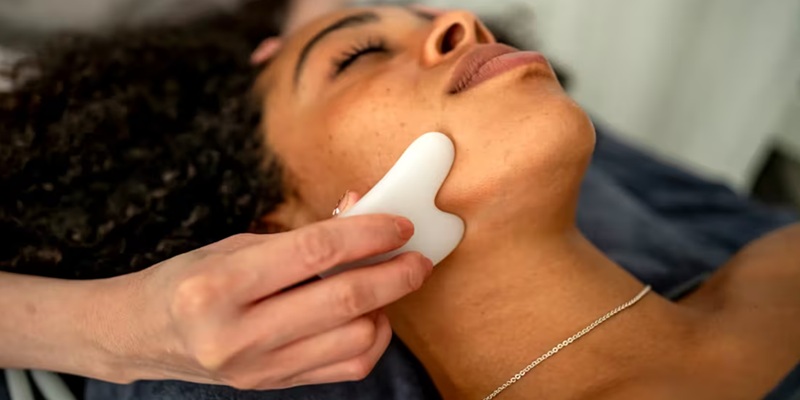
Jade, Rose Quartz, Or Stainless Steel: Which Is Right For Your Skin
When selecting a tool, look past the metaphysical marketing and focus on the physical interaction with your skin. The efficacy of your ritual depends heavily on thermal conductivity and hygiene.
Jade
Jade (Nephrite) is the traditional standard. It offers naturally high friction, providing excellent feedback when dragged across the skin.
However, be cautious: authentic Nephrite is non-porous, but cheaper, chemically treated imitations often flood the market. These can be porous, acting as sponges for bacteria and dead skin cells. If you choose jade, ensure you are buying from a reputable source to avoid trapping grime against your face.
Rose Quartz
Rose Quartz is denser and more complex than jade. In thermodynamics, it maintains a cool temperature for a longer time due to its specific heat capacity.
If your primary goal is reducing morning redness or calming inflammation, the sustained coolness of rose quartz acts as a vasoconstrictor. Its surface is typically polished to a glass-like finish, offering a smoother texture that is kinder to highly sensitive or reactive skin.
Stainless Stee
Stainless Steel represents the modern, utilitarian evolution. Usually made from medical-grade recycled material, it is non-porous and inherently antibacterial—the most hygienic option available.
It conducts heat rapidly, meaning it feels intensely cold upon initial contact, like a shock of ice waking up tired under-eyes. It is also heavier, allowing gravity to assist your stroke without you needing to apply manual pressure.
Bian Stone
Bian Stone is a composite material used in Traditional Chinese Medicine. It feels heavier and has a micro-crystalline structure that creates a slightly textured surface. This texture provides more traction, making it superior for deeper, therapeutic muscle work rather than just superficial aesthetic gliding.
User Tip: Be honest about your habits. If you have a history of dropping toiletries on tiled bathroom floors, skip the crystals. Stainless steel is the only material that guarantees survival after a fall from the vanity.
Which Gua Sha Shape Actually Fits Your Face Shape
A tool must fit the topography of your face to be effective; using the wrong curve can result in ineffective drainage or unnecessary bruising. The stone's geometry dictates the pressure distribution and the specific anatomical target.
The Heart-Shaped tool is the industry standard for a reason. Its deep 'V' notch is engineered to hug the mandibular angle (jawline) and the brow bone perfectly. It provides an intuitive guide for sharp contours, making it the most accessible entry point for beginners who are still refining their hand angle and pressure technique. The varying curves along the long edges also allow for greater versatility in the neck.
The Wing or Fin shape offers a long, sweeping curve reminiscent of a shark fin. This design maximizes surface area contact, making it the optimal choice for flushing lymphatic fluid from broad, flat zones like the cheeks and forehead. It allows for a continuous, uninterrupted stroke from the center of the face toward the lymph nodes near the ears, moving fluid efficiently with fewer passes.
For precision work, look to the Wand or Spoon. These smaller, rounded instruments fit into orbital hollows where larger stones cannot reach. They are specifically designed for delicate under-eye depuffing and targeting specific acupressure trigger points to release tension.
Finally, the Comb Edge features a serrated side, often integrated into rectangular best gua sha designs. This is not for surface gliding, but for cross-friction. The teeth are designed to disrupt fascia adhesions and stimulate significant blood flow to the epidermis without damaging the skin barrier. This is the tool of choice for erasing fine lines.
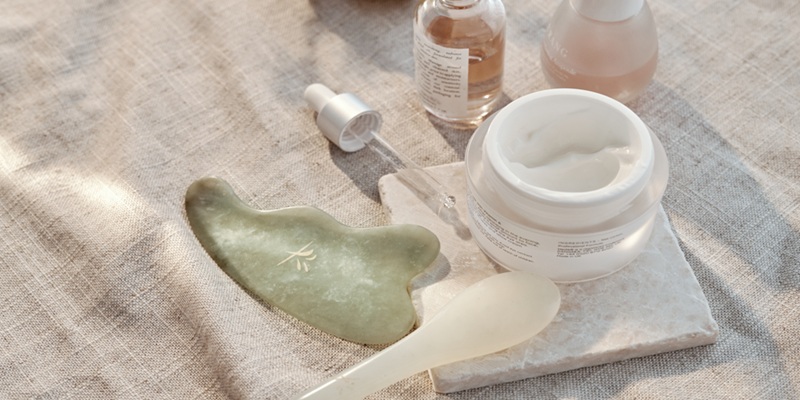
Finding The Right Facial Oil For a Smooth Gua Sha Massage
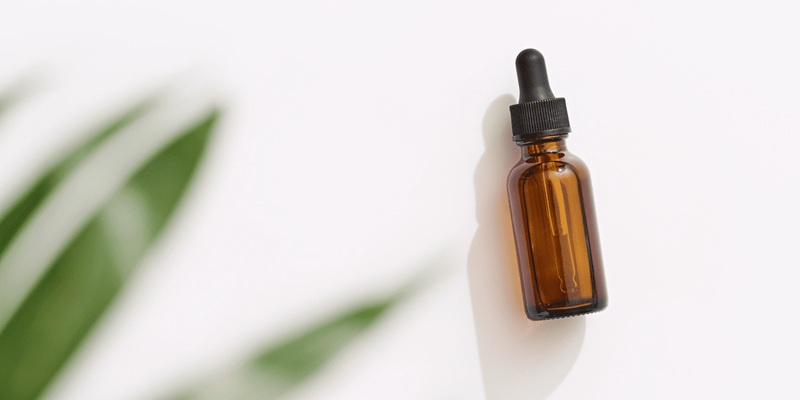
Once you have your tool, resist the urge to scrape dry skin. To use a gua sha tool effectively, you must strictly adhere to the 'Rule of Slip.' Without a proper conducting medium, the friction generated between the tool and the epidermis creates drag rather than flow. This tugging action compromises the skin's structural integrity, leading to microtears.
The objective is to reduce friction so the tool feels like it is skating on ice. However, the choice of medium is critical. For those with oily or acne-prone skin, heavy occlusives can be disastrous. Instead, opt for Jojoba or Squalane oil; these are chemically similar to human sebum and provide necessary slip without clogging pores.
Conversely, dry or mature skin types require richer lipids, such as Rosehip or Marula oil. These heavier oils maintain the glide throughout the session without absorbing too quickly, ensuring you don't start dragging halfway through. According to dermatologists, protecting the skin barrier is paramount. A lubricated surface allows the tool to manipulate the fascia and muscle beneath without damaging the delicate surface layer.
Technique Matters: How To Use Your Gua Sha Facial Tool Effectively
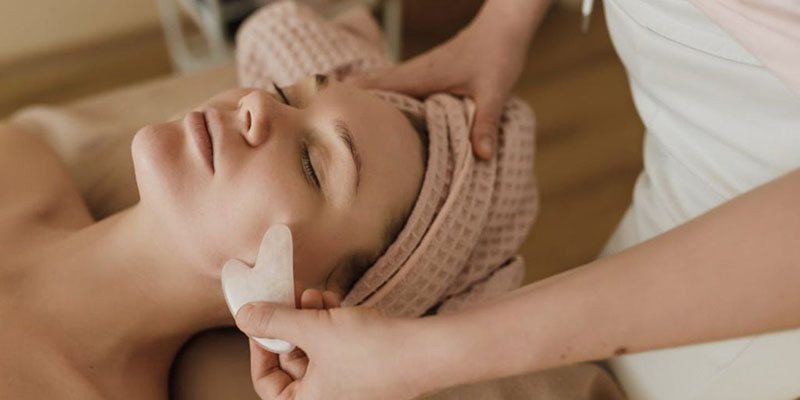
With the skin prepped, the focus shifts to biomechanics. Effective gua sha is not about brute force; it is about geometry and intent. The most common beginner error is holding the tool perpendicular to the face.
The Angle: Your tool should be held at a 15-45-degree angle, lying almost flat against the skin. A 90-degree angle cuts into the tissue rather than lifting it. By keeping the tool flat, you increase the surface area contact for effective release.
Pressure: Pressure is a variable, not a constant. When targeting lymphatic drainage to reduce puffiness, the touch must be "light as a feather"—lymphatic vessels sit just below the surface. However, for tight muscle knots, you can use medium pressure. If the skin turns deep red or bruises instantly, you are pushing too hard.
Direction: Gravity is the constant downward force; your routine is the counter-force. Always sweep the tool upwards and outwards toward the hairline. The only exception is the neck: to facilitate drainage into the lymph nodes, finish your routine by sweeping down the sides of the neck.
Frequency: Consistency yields results. Aim for 3 to 5 sessions a week. This allows the tissue to respond without becoming over-sensitized.
Choosing The Right Gua Sha Tool For Real-Life Scenarios
The most effective one is the piece that aligns with your daily habits, your environment, and how much time and care you realistically give yourself. If you're a chronic night owl who goes to bed late and wakes up puffy, the goal isn't a full sculpting routine—it's speed and drainage.
In this case, a heart-shaped gua sha with a defined V-notch works best, because it lets you "unlock" the lymphatic switch behind the ears.
With feather-light pressure, press and glide just behind the jaw hinge for 30–60 seconds per side.
You'll often feel a subtle warmth or a draining sensation, and the mirror payoff is fast: the jawline looks cleaner without touching the rest of the face.
On the other hand, if you travel frequently, especially on long flights, stainless steel is the clear winner.
I always reach for it when flying—its weight feels grounding in the hand, it survives being tossed into a toiletry bag, and the icy first contact against tired under-eyes is instantly awakening.
Paired with a thick cream in a dry airplane cabin, it glides smoothly without tugging and noticeably reduces that "inflated" post-flight look.
If your skin is highly sensitive or reactive, rose quartz should be your default.
Its ultra-smooth, glass-like surface creates almost no drag; during a redness-prone week, the strokes felt calming rather than stimulating, and my skin stayed cool and even-toned rather than flushed.
When the tool's material, shape, and use case match your lifestyle—whether that's rushed mornings, frequent travel, or sensitive skin days—gua sha stops being a symbolic ritual and becomes a genuinely functional form of facial maintenance, with results you can both feel and see.
Care And Quality: Cleaning Your Stone And Spotting Fakes
Usage is only half the equation; maintenance prevents your wellness tool from becoming a bacterial vector. Because gua sha tools are dragged across oils and skin cells, they are prime candidates for bacterial buildup.
If you use a stone tool, wash it thoroughly with warm water and a gentle antibacterial soap after every single use. Stone is naturally porous to varying degrees. For stainless steel users, a quick spray with isopropyl alcohol instantly sterilizes the surface.
Spotting Fakes: Verifying authenticity is essential. Genuine stone is cool to the touch and heavy. Inspect the material under light: natural stone will have veins and imperfections. If you see tiny, perfectly spherical air bubbles suspended inside the material, you are holding dyed Glass. Glass is fragile and can shatter under pressure, posing a safety risk.
Ready To Sculpt Your Glow?
Choosing the best gua sha tool is about understanding your unique skin needs and lifestyle. Whether you opt for the cooling touch of a jade gua sha tool or the durability of stainless steel, consistency is key to seeing results. Don't let your tool gather dust—grab your facial oil and start sculpting your glow today.
Sources
Recent Posts
-
![]()
How to Protect and Repair the Skin Barrier?
-
![]()
Does Gua Sha Really Work? Here's What Science Says
-
![]()
Best Bakuchiol Serums Worth Trying (And How To Use Them)
-
![]()
How Dry Skin Can Avoid Breakouts While Staying Moisturized
-
![]()
8 Best Tinted Lip Balms That Moisturize While Adding Color
-
![]()
Cica Skincare Solutions: Creams, Balms, And Masks For Sensitive Skin