Exploring the Benefits of Facial Gua Sha: Techniques and Tips
Elison E
|
March 7, 2026
Have you probably noticed facial gua sha showing up more and more in skincare routines? It’s a traditional Chinese technique that’s been used for centuries, but recently people are treating it as part of everyday skincare. Instead of promising instant results, it’s more about gradually improving circulation, easing facial tension, and helping your skin look less tired over time.
Uncovering the Ancient Art of Facial Gua Sha
Origins and Cultural Significance
Facial gua sha comes from traditional Chinese medicine. It involves using a smooth-edged tool to glide gently across the skin, which helps stimulate blood flow and relax tight areas.
Originally, gua sha was used on the body with much stronger pressure, often leaving visible redness. Facial gua sha is a much gentler version. The focus is less on intensity and more on controlled, light movements that the skin can tolerate regularly.
The Philosophy behind the Practices
The practice is often explained through the concept of “qi,” or energy flow in the body. In that context, puffiness or tightness can be seen as a kind of stagnation.
Even if you don’t follow that framework, the physical side is easy to understand. Moving the tool along the skin encourages circulation and helps release tension in the underlying muscles. That alone can make the face look more relaxed and less puffy.
The Benefits of Facial Gua Sha
Enhancing Circulation and Lymphatic Drainage
When you use a gua sha tool with light pressure, you’re essentially helping move fluid under the skin. This is especially noticeable in the morning.
For example, gently gliding from the sides of the nose toward the ears can help reduce puffiness in the cheeks. Under the eyes, using very light, short strokes can make that area look less swollen. The effect isn’t dramatic, but it does make the face look fresher.
Relaxation and Reducing Tension
A lot of tension builds up in the jaw, temples, and between the eyebrows, especially if you spend long hours looking at screens or tend to clench your teeth.
Using gua sha in these areas feels similar to a slow, controlled massage. If you take your time with it, you may notice your face feels less tight afterward. Some people also find it helps with mild tension headaches, particularly when used around the temples and scalp.
Improving Skin Texture and Tone
Gua sha doesn’t replace active ingredients like retinol or acids, but it can support your routine.
When circulation improves, skin often looks a bit more even and less dull. Using the tool with a facial oil also helps soften the skin. For instance, jojoba oil feels light and absorbs quickly, while rosehip oil is slightly richer and gives a subtle glow. With regular use, the skin can look smoother, mostly because it’s better hydrated and less tense.
Mastering the Techniques: How to Perform Facial Gua Sha?
Preparing Your Skin
Start with a clean face. Then apply a facial oil or a slightly thicker serum so the tool can glide easily. If the tool feels like it’s dragging, you probably need more product.
The skin should feel slippery, not sticky. This step makes a big difference in how comfortable and effective the routine is.
The Basic Sequence
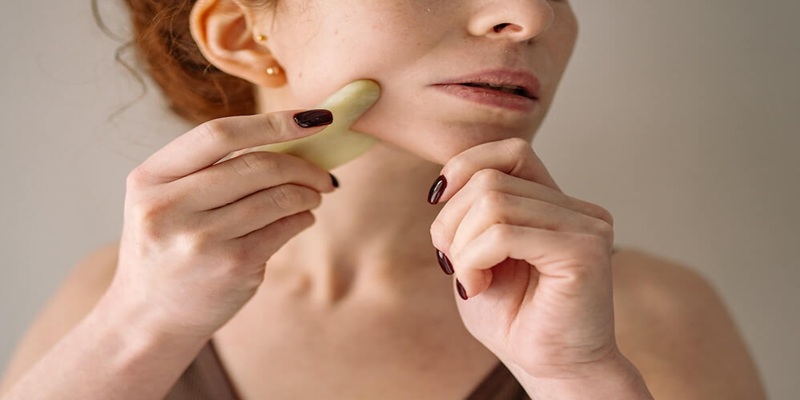
It helps to start at the neck, then move up to the face. Use slow strokes from the chin toward the ears, then from the sides of the nose across the cheeks.
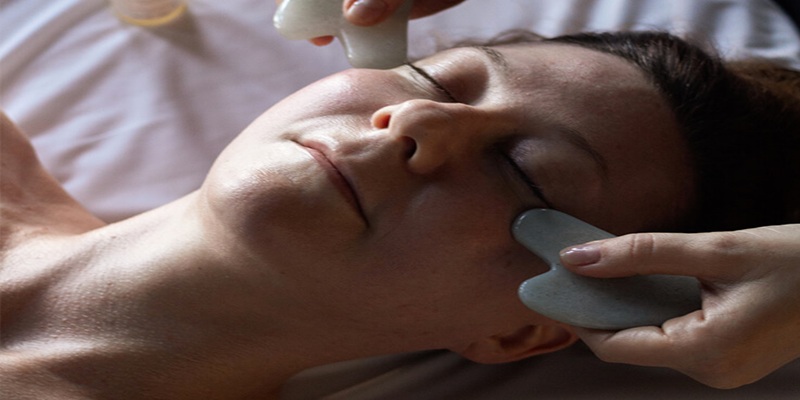
Under the eyes, keep the pressure very light and the movements short. Try to keep the tool at a low angle against the skin instead of pressing straight down.
Forehead and Scalp
On the forehead, move from the center outward toward the temples. For the area between the brows, use small, gentle strokes to ease tension.
You can also use the tool along the scalp. Light pressure there can feel surprisingly relaxing, especially if you tend to carry stress in your head or temples.
Pressure and Frequency
The pressure should be light to moderate. You should feel the tool moving the skin slightly, but it shouldn’t hurt or leave strong redness.
Each stroke can be repeated a few times, around three to five passes per area. Using gua sha two to three times a week is enough for most people. If your skin reacts well, you can use it more often.
Integrating Facial Gua Sha into Your Skincare Routine
Getting Skin Ready
Cleanse your face to remove makeup, sunscreen, and excess oil. After drying your skin, apply a serum or oil.
Hydrating serums with ingredients like hyaluronic acid work well underneath an oil, helping the skin stay soft and slightly plump during the massage.
Learning Proper Technique
Hold the tool at a slight angle, roughly around 15 degrees. Use slow, one-directional strokes instead of going back and forth repeatedly.
Keeping a simple order—neck, jawline, cheeks, then forehead—makes the routine easier to follow and more consistent.
Building a Routine
You don’t need to do this every day. A few times a week is enough to see gradual changes.
Evening tends to be the most practical time, since it helps your face relax before sleep. After each use, wash the tool with warm water and a gentle cleanser so it stays clean.
Choosing the Right Tools and Products
Selecting a Gua Sha Tool
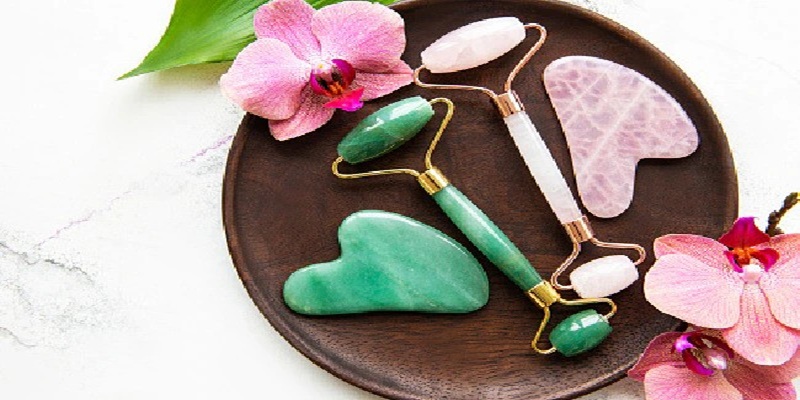
The material mainly affects how the tool feels on the skin. Jade and rose quartz are common because they stay cool and feel smooth. Stainless steel tools are more durable and naturally stay colder for longer.
The shape also changes how easy it is to use. Wider curves work better on the cheeks and forehead, while smaller edges are more practical around the jaw and under the eyes. One well-designed tool is usually enough.
Supporting Skincare Products
A good oil makes the process much smoother and more comfortable. Lightweight options tend to work best:
Jojoba oil: absorbs quickly and doesn’t feel heavy
Rosehip oil: slightly richer, adds a bit of glow
Squalane: very light and suitable for sensitive skin
If you prefer serums, choose ones that aren’t too watery so the tool can glide without pulling.
Reap the Benefits Over Time
Gua sha works best when you treat it as a regular, low-effort habit rather than something you expect instant results from.
Start gently and adjust based on how your skin feels. Over time, it can help your face look a bit less puffy and more relaxed. When combined with basic skincare, good sleep, and a balanced routine, the effects are subtle but noticeable.
Recent Posts
-
![]()
Why Bakuchiol Is The New Gold Standard For Natural Anti-Aging
-
![]()
Non-Comedogenic Moisturizers Recommend For Oily Skin
-
![]()
12 Best Lip Balms for Daily Hydration You'll Actually Use
-
![]()
Stop Clogged Pores: Non Comedogenic Moisturizers That Work
-
![]()
Best Healing Lip Balms for Sensitive, Dry, or Damaged Lips
-
![]()
Pimple Patches Tested: Find the Perfect Patch for Your Skin Type